Aluminum Welding Wire for Semiconductor Equipment半導體設備用鋁焊接線
Vacuum chambers · process equipment · UHV systems真空腔體 · 製程設備 · 超高真空系統
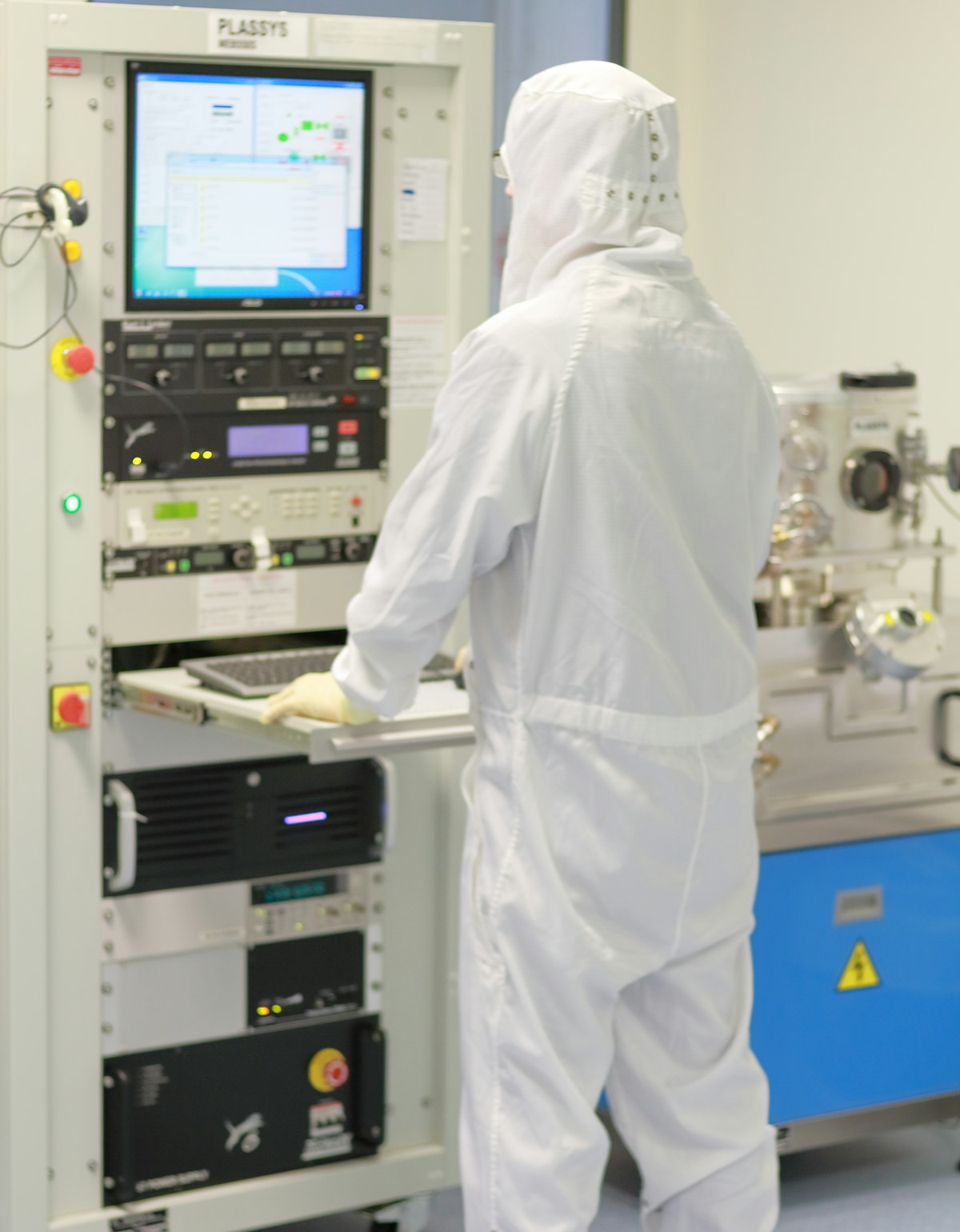
Semiconductor fabrication runs inside ultra-high-vacuum environments where a single contaminant can destroy a wafer batch. Aluminum's far lower hydrogen permeation versus stainless steel makes it the chamber material of choice — and weld integrity requirements are correspondingly high.半導體製程在超高真空中進行,一粒污染物足以毀掉整批晶圓。鋁的氫滲透率遠低於不鏽鋼,是腔體首選材料——對焊縫完整性的要求也相應嚴格。
Vacuum and process chambers for semiconductor tools are machined and welded from 6061-T6 — and 5083 where the chamber is too large to machine from a single billet — because aluminum outgasses less and lets hydrogen permeate through it far less readily than stainless steel. That advantage belongs to the base metal. The weld is where it can be lost: a single pore chain through a seam is a leak path, and a trapped pocket behind a partial-penetration weld is a virtual leak that will fail the helium test long after the chamber looks finished.半導體設備的真空與製程腔體以 6061-T6 加工並焊接——腔體大到無法從單一鋁錠加工時則用 5083——因為鋁的放氣量與氫的滲透率都遠低於不鏽鋼。這項優勢屬於母材。焊縫是可能失去它的地方:貫穿焊縫的一串氣孔就是洩漏路徑,部分熔透焊縫後方封住的空腔則是虛漏,會在腔體看起來完工很久之後才讓氦檢不過。
Chambers, Frames and Gas Panels腔體、機架與氣體面板
The welded aluminum on a semiconductor tool falls into three classes with three different acceptance criteria: vacuum-boundary welds on the chamber itself, judged by helium leak rate; structural frames and load ports, judged by strength and flatness; and cooling and gas-panel manifolds, judged by cleanliness and pressure tightness.半導體設備上的焊接鋁件分三類,驗收標準各不相同:腔體本身的真空邊界焊縫,以氦洩漏率判定;結構機架與裝載埠,以強度與平面度判定;冷卻與氣體面板歧管,以潔淨度與壓力密封性判定。
| Component部位 | Typical alloy常用合金 | Acceptance criterion驗收標準 | Filler焊材 |
|---|---|---|---|
| Vacuum chamber bodies, ports, flanges真空腔體本體、接口、法蘭 | 6061-T6 · 5083 | Helium leak rate; no virtual leaks氦洩漏率;無虛漏 | ER4043 · ER5356 |
| Tool frames, load ports, enclosures設備機架、裝載埠、外罩 | 6061-T6 · 6063-T6 | Strength, flatness, anodize match強度、平面度、陽極色一致 | ER5356 |
| Cooling manifolds, gas-panel brackets冷卻歧管、氣體面板支架 | 6061 · 5052 | Cleanliness; pressure tightness潔淨度;壓力密封性 | ER4043 · ER5356 |
Porosity Is a Leak氣孔就是洩漏
Hydrogen is the enemy. Molten aluminum dissolves far more hydrogen than solid aluminum can hold, so whatever the pool picks up comes out of solution as it freezes and leaves porosity — on a structural weld a cosmetic defect, on a vacuum boundary a leak. Moisture is the usual source: welding-grade shielding gas is specified to a dew point of about 10 parts per million water vapor or drier, because only a little more is enough to cause porosity. Chamber shops control it by machining the joint clean, degreasing, using dry high-purity argon or argon-helium, and keeping the wire itself free of drawing lubricant and surface oxide. A wire that arrives with residue on it puts hydrogen into every seam it touches.氫是敵人。液態鋁能溶解的氫遠多於固態鋁能容納的量,所以熔池吸進的氫會在凝固時析出形成氣孔——在結構焊縫上是外觀缺陷,在真空邊界上就是洩漏。最常見的來源是水氣:焊接級保護氣的規格要求水氣含量約 10 ppm 以下的露點,因為只要再多一點就足以產生氣孔。腔體廠的對策是把接頭加工乾淨、除油、使用乾燥高純度氬氣或氬氦混合氣,並讓焊線本身不帶拉伸潤滑劑與表面氧化物。到貨時帶著殘留物的焊線,會把氫帶進它碰到的每一道焊縫。
Full penetration from the vacuum side is the second rule. A weld that leaves a crevice or an unfused root behind it traps gas that bleeds into the chamber for hours — the virtual leak that no amount of pumping removes. Consistent wire diameter and steady feed keep the arc where the root is, which is the practical link between wire quality and leak rate.第二條規則是從真空側全熔透。焊縫若在背後留下縫隙或未熔合焊根,會封住氣體並在數小時內持續滲入腔體——這就是再怎麼抽真空也除不掉的虛漏。一致的線徑與穩定的送線讓電弧停在焊根位置,這是焊線品質與洩漏率之間實際的關聯。
What GOLDING ControlsGOLDING 控制什麼
GOLDING ER4043 and ER5356 are manufactured toward a ±0.01 mm diameter target on 7 kg precision layer-wound spools, with cast and helix controlled for stable feeding on the pulsed-MIG and automated cold-wire TIG systems used for chamber work. Every batch ships with its chemical analysis so the equipment maker's traceability file is complete. GOLDING does not certify a leak rate — that is measured on the finished chamber under the equipment maker's procedure — and does not claim a purity grade beyond the AWS A5.10 composition limits it is classified to.GOLDING 的 ER4043 與 ER5356 以 ±0.01 mm 線徑為製造目標、採 7 kg 精密層繞線盤,並針對腔體加工常用的脈衝 MIG 與自動冷絲 TIG 系統控制弧度與螺旋以穩定送線。每批次隨貨附化學成分分析,讓設備廠的追溯檔案完整。GOLDING 不對洩漏率作認證——那是在完工腔體上依設備廠程序量測的——也不宣稱任何超出其 AWS A5.10 分類成分限值的純度等級。
Specifications: Who Holds What規範:誰持有什麼
Semiconductor equipment is built to the tool maker's own specifications — helium leak-rate limits, cleanliness and outgassing procedures, surface finish — and the filler metal is qualified inside that maker's welding procedure. GOLDING supplies wire classified to AWS A5.10 with the batch documentation that traceability file requires; the leak test, the bake-out and the acceptance belong to the chamber builder.半導體設備依設備廠自己的規範建造——氦洩漏率限值、潔淨與放氣程序、表面處理——焊材在該廠的焊接程序中被評定合格。GOLDING 供應符合 AWS A5.10 分類、附該追溯檔案所需批次文件的焊線;洩漏測試、烘烤與驗收屬於腔體製造商。
Frequently Asked Questions常見問題
ER4043 or ER5356, both classified to AWS A5.10. ER4043's fluid pool closes full-penetration seams with the lowest crack risk; ER5356 is stronger and anodizes to match. The equipment maker's qualified procedure decides — and porosity control matters more than the choice between them.ER4043 或 ER5356,兩者皆符合 AWS A5.10 分類。ER4043 的流動熔池以最低裂紋風險收合全熔透焊縫;ER5356 更強且陽極色一致。由設備廠已評定的程序決定——而氣孔控制比兩者之間的選擇更重要。
No. Leak rate is a property of the finished chamber — joint design, penetration, cleanliness and procedure — and is measured by the chamber builder. GOLDING controls the wire: diameter consistency, feed stability and per-batch chemistry.不。洩漏率是完工腔體的性質——接頭設計、熔透、潔淨度與程序——由腔體製造商量測。GOLDING 控制的是焊線:線徑一致性、送線穩定性與批次化學成分。
No — it is a property of the aluminum base metal the chamber is made from, and the reason aluminum is chosen over stainless steel. The weld's job is not to undo that advantage with porosity or a virtual leak.不是——那是腔體所用鋁母材的性質,也是選鋁而非不鏽鋼的原因。焊縫的任務是別用氣孔或虛漏把這項優勢抵消掉。