Aluminum Welding Wire for Automotive & EV汽車與電動車用鋁焊接線
EV chassis · battery enclosures · structural parts電動車底盤 · 電池殼體 · 結構件
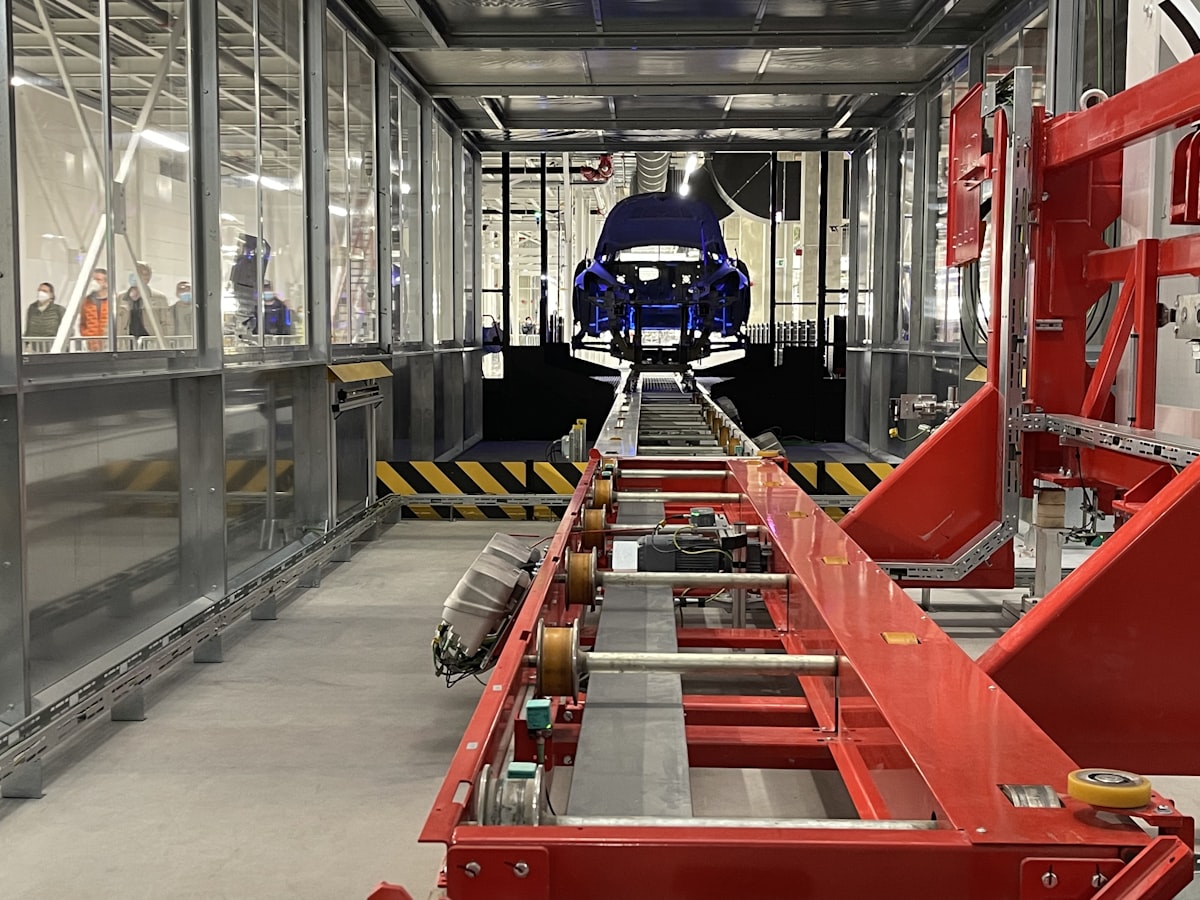
New-energy vehicles demand aluminum structures that are simultaneously lighter, stronger and more precisely manufactured. High-speed robotic MIG lines assembling EV chassis and battery enclosures need filler metal with consistent feedability and alloy purity.新能源車要求鋁結構更輕、更強、更精密。組裝電動車底盤與電池殼體的高速機器人 MIG 產線,需要送線穩定、合金純淨的焊材。
Automotive aluminum arrives in three product forms, and the filler follows the form: 6xxx extrusions for battery trays, crash boxes and subframes; 5754 and 5182 sheet for inner panels; and A356-type castings for housings and brackets. Much of a modern body is joined by adhesives, rivets, laser and friction stir welding, but MIG — increasingly with pulsed transfer and, on enclosures, laser welding with wire — still carries the extrusion frames and the castings. That is the work this page is about.汽車用鋁以三種產品形態出現,焊材跟著形態走:電池托盤、潰縮盒與副車架用 6xxx 擠型;內板用 5754 與 5182 板材;殼體與支架用 A356 系鑄件。現代車身大部分以膠接、鉚接、雷射與攪拌摩擦焊接合,但 MIG——越來越多採脈衝過渡,在殼體上則是填絲雷射焊——仍承擔擠型框架與鑄件。這頁講的就是這部分工作。
What the Wire Actually Joins焊線實際接合的是什麼
Battery enclosures are the largest welded aluminum part on an electric vehicle: a frame of 6082-T6 or 6061-T6 extrusions welded to a floor plate, then machined flat on the sealing face. Subframes and crash structures use the same extrusion alloys for controlled energy absorption. Castings in A356 or 356 take housings, brackets and heat-exchanger tanks.電池殼體是電動車上最大的焊接鋁件:6082-T6 或 6061-T6 擠型框架焊到底板上,再把密封面加工平整。副車架與潰縮結構用同樣的擠型合金以控制能量吸收。A356 或 356 鑄件則用於殼體、支架與熱交換器水箱。
| Component部位 | Typical alloy常用合金 | Why原因 | Filler焊材 |
|---|---|---|---|
| Battery tray frames and floors電池托盤框架與底板 | 6082-T6 · 6061-T6 | Extrudable, strong, must be leak-tight可擠型、強度高、必須氣密 | ER5356 |
| Subframes, crash boxes, roof rails副車架、潰縮盒、車頂縱梁 | 6xxx | Controlled energy absorption可控的能量吸收 | ER5356 |
| Inner panels, closures內板、開閉件 | 5754 · 5182 | Formability; not heat-treatable可成形;非熱處理型 | ER5356 |
| Housings, brackets, heat-exchanger tanks殼體、支架、熱交換器水箱 | A356 · 356 | Castability; silicon-rich可鑄性;高矽 | ER4043 |
| Cast-to-extrusion joints鑄件對擠型接頭 | A356 + 6xxx | Crack sensitivity governs裂敏主導 | ER4043 |
Leak-Tight and Crash-Relevant氣密與碰撞相關
A battery enclosure has to be sealed against water and dust for the life of the vehicle, so every pore in a frame weld is a potential leak path — porosity control, not strength, is the first acceptance criterion. Weld beads on the sealing face are blended flush before the cover is bonded, which means the bead profile has to be consistent enough to machine without exposing pores. For the floor-to-frame seam, friction stir welding is increasingly used; MIG remains the process for the frame corners, brackets and three-dimensional joints.電池殼體必須在整車壽命內防水防塵,所以框架焊縫的每一個氣孔都是潛在洩漏路徑——第一項驗收標準是氣孔控制,不是強度。密封面上的焊道在黏合上蓋前要磨平,這代表焊道外形必須一致到加工後不露出氣孔。底板對框架的焊縫越來越多改用攪拌摩擦焊;框架轉角、支架與立體接頭仍以 MIG 為主。
Crash structures add the second constraint. 6xxx-T6 extrusions lose typically 30–50% of their strength in the heat-affected zone, so a crash box is designed with the softened zone in mind and the weld has to land where the engineer put it, with the same profile every time. On a robotic line that is a feed-consistency requirement before it is anything else.潰縮結構加上第二個限制。6xxx-T6 擠型在熱影響區通常掉 30–50% 強度,所以潰縮盒是把軟化區考慮在內設計的,焊縫必須落在工程師指定的位置、每次外形都一樣。在機器人產線上,這首先是送線一致性的要求。
Robotic MIG and Laser Wire機器人 MIG 與雷射填絲
Automotive lines run at takt times measured in seconds, on robots that do not stop to clear a bird-nest. GOLDING ER5356 and ER4043 are manufactured toward a ±0.01 mm diameter target on 7 kg precision layer-wound spools with controlled cast and helix, so the wire tracks straight through long liners and the contact tip wears evenly. Where enclosures are laser-welded with filler wire, the same diameter consistency governs the process window — see the laser welding wire guide. Each batch ships with its chemical analysis for PPAP-style documentation.汽車產線的節拍以秒計,機器人不會停下來清理鳥巢。GOLDING 的 ER5356 與 ER4043 以 ±0.01 mm 線徑為製造目標、採 7 kg 精密層繞線盤並控制弧度與螺旋,讓焊線在長送線管中走直、導電嘴均勻磨耗。殼體採填絲雷射焊時,同樣的線徑一致性決定製程窗口——見雷射焊接焊線指南。每批次隨貨附化學成分分析,供 PPAP 類文件使用。
Standards: Who Holds What標準:誰持有什麼
Automotive supply chains run on OEM material specifications and IATF 16949, the automotive quality-management scheme held by tier suppliers. GOLDING's quality system is certified to ISO 9001:2015 — it does not hold IATF 16949, and says so. The filler is qualified by the tier supplier inside their own welding procedure and PPAP; GOLDING's part is wire classified to AWS A5.10 with the batch documentation that process needs.汽車供應鏈依 OEM 材料規範與 IATF 16949 運作,後者是各級供應商持有的汽車品質管理制度。GOLDING 的品質系統通過 ISO 9001:2015 認證——不持有 IATF 16949,且如實說明。焊材由供應商在自己的焊接程序與 PPAP 中評定合格;GOLDING 的角色是提供符合 AWS A5.10 分類、附該流程所需批次文件的焊線。
Frequently Asked Questions常見問題
ER5356 for the frame and any load-bearing joint; ER4043 where a casting meets the frame or a joint is crack-prone. Because the enclosure must be leak-tight, porosity control — clean wire, dry gas, stable feed — matters more than the strength difference between the two.框架與任何承載接頭用 ER5356;鑄件對框架或易裂接頭用 ER4043。因為殼體必須氣密,氣孔控制——乾淨焊線、乾燥保護氣、穩定送線——比兩者的強度差異更重要。
No. GOLDING is certified to ISO 9001:2015. IATF 16949 is the automotive quality scheme held by tier suppliers, who qualify the wire within their own process and PPAP. GOLDING supplies AWS A5.10-classified wire with per-batch chemistry.沒有。GOLDING 通過 ISO 9001:2015 認證。IATF 16949 是各級供應商持有的汽車品質制度,他們在自己的製程與 PPAP 中評定焊線合格。GOLDING 供應符合 AWS A5.10 分類、附批次化學成分的焊線。
ER4043. Its silicon matches the casting's own, giving a fluid pool with low crack sensitivity. ER5356 on a silicon-rich casting forms brittle magnesium-silicide in the weld.ER4043。它的矽與鑄件本身的矽匹配,熔池流動性佳、裂敏低。在高矽鑄件上用 ER5356 會在焊縫生成脆性鎂矽化物。