Aluminum Welding Wire for Rail Transportation軌道交通用鋁焊接線
High-speed rail · metro · light rail高速鐵路 · 捷運 · 輕軌
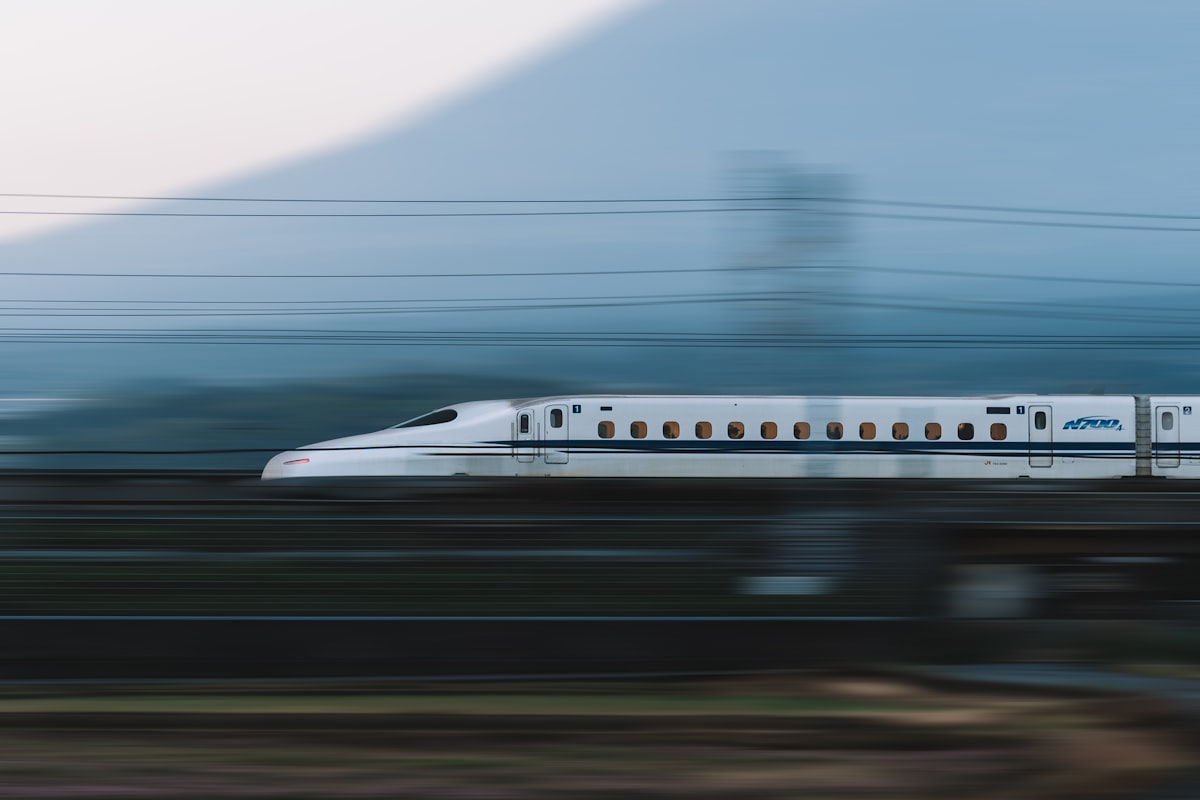
Every kilogram saved on a rail car body translates into energy savings across its entire service life. Lightweight aluminum car bodies must pass demanding international rail safety standards while withstanding continuous fatigue loading.車體每減一公斤,都在整個服役期省下能耗。輕量化鋁製車體須通過嚴格的國際軌道安全標準,並承受持續疲勞負載。
Unlike ships or pressure vessels, an aluminum rail car body is built almost entirely from large hollow 6xxx extrusions — and 6xxx is one of the few alloy families with no matching filler metal. That single fact drives every welding decision on a car body: which 5xxx wire to use, how much strength the joint loses in the heat-affected zone, and why feed consistency on long automated seams matters more here than in most industries.跟船舶或壓力容器不同,鋁製軌道車體幾乎全由大型 6xxx 中空擠型組成——而 6xxx 是少數沒有同系焊材的合金族之一。這一件事決定了車體上的每個焊接抉擇:該用哪支 5xxx 焊線、接頭在熱影響區會掉多少強度、以及為什麼長焊縫自動化產線的送線一致性在這裡比多數行業更關鍵。
What an Aluminum Car Body Is Made Of鋁製車體用什麼合金
Side walls, roof and floor are extruded as wide multi-hollow profiles and welded lengthwise into panels. 6005A-T6 is the most common choice because it extrudes complex hollow sections better than 6082 while keeping medium strength; 6082-T6 is used where higher strength justifies a simpler profile. Plate and sheet in 5083 appear in underframe brackets and end structures.側牆、車頂與地板以寬幅多腔擠型製成,再縱向焊接成板件。6005A-T6 最常見,因為它比 6082 更容易擠出複雜中空斷面,同時保有中等強度;6082-T6 用在需要更高強度、可接受較簡單斷面的部位。5083 板材則出現在底架支架與端部結構。
| Component部位 | Typical alloy常用合金 | Why原因 | Filler焊材 |
|---|---|---|---|
| Side wall / roof / floor panels側牆/車頂/地板 | 6005A-T6 | Extrudes wide multi-hollow profiles; medium strength可擠出寬幅多腔斷面;中等強度 | ER5356 · ER5183 |
| Underframe, bolsters, end structures底架、枕梁、端部結構 | 6082-T6 · 5083 | Higher strength; plate for brackets and load paths更高強度;板材用於支架與傳力路徑 | ER5183 · ER5356 |
| Non-structural fillet and tack welds on 6xxx6xxx 上的非結構角焊與定位焊 | 6005A · 6082 | Crack sensitivity outweighs strength; fluid pool helps裂敏比強度重要;流動性好的熔池有幫助 | ER4043 |
The Heat-Affected Zone Problem熱影響區的問題
6xxx-T6 extrusions get their strength from precipitation hardening, and the weld thermal cycle partly undoes it. The heat-affected zone of a MIG-welded 6005A-T6 or 6082-T6 joint typically loses 30–50% of its strength, and it does not recover without a full re-solution and ageing treatment — impractical on a 25-metre car body. EN 1999-1-1 (Eurocode 9) therefore designs welded aluminum structures with explicit HAZ reduction factors, not base-metal values.6xxx-T6 擠型的強度來自析出硬化,而焊接熱循環會部分抵消它。MIG 焊接的 6005A-T6 或 6082-T6 接頭,熱影響區強度通常掉 30–50%,而且不經完整的固溶加時效處理不會恢復——這在 25 公尺長的車體上並不可行。因此 EN 1999-1-1(Eurocode 9)設計焊接鋁結構時採用明確的熱影響區折減係數,而不是母材值。
Two consequences for wire selection. First, the weld metal itself should not become the weakest link — ER5183, with its higher manganese, gives higher as-welded strength than ER5356 and is the usual choice where the joint governs. Second, because the HAZ is the fixed weak point, designers move welds away from peak-stress locations and rely on a consistent, repeatable bead — which is where feed stability starts to matter.對焊材選擇有兩個結果。第一,焊縫金屬本身不該成為最弱環節——ER5183 含錳較高,焊態強度高於 ER5356,是接頭強度主導時的常用選擇。第二,既然熱影響區是固定的弱點,設計者會把焊縫移離應力峰值位置,並仰賴一致、可重現的焊道——送線穩定性從這裡開始變得重要。
Fatigue, Long Seams and Automation疲勞、長焊縫與自動化
A car body sees millions of load cycles over its service life, and EN 12663 sets the fatigue load cases it must survive. Most fatigue cracks in welded aluminum start at the weld toe, so bead profile — not just strength — decides service life. Panel seams run for tens of metres on gantry or robotic MIG systems; on the longest flat seams friction stir welding is increasingly used, while MIG remains the process for three-dimensional joints, fillet welds, underframe assemblies and repair. Wherever MIG is used, a feed interruption mid-seam leaves a stop-start defect that has to be ground out and re-welded.車體在服役期間承受數百萬次負載循環,EN 12663 規定了它必須通過的疲勞載荷工況。焊接鋁結構的疲勞裂紋多數從焊趾起裂,所以焊道外形——不只是強度——決定了服役壽命。板件焊縫在龍門或機器人 MIG 系統上一跑就是數十公尺;最長的平面焊縫越來越多改用攪拌摩擦焊,而立體接頭、角焊、底架組裝與修補仍以 MIG 為主。凡是用 MIG 的地方,焊縫中途一次送線中斷就會留下起停缺陷,必須磨除重焊。
GOLDING ER5356 and ER5183 are manufactured toward a ±0.01 mm diameter target on 7 kg precision layer-wound spools, with cast and helix controlled so the wire runs straight through long liners into push-pull and robotic feeders. Each batch ships with its chemical analysis for the fabricator's records.GOLDING 的 ER5356 與 ER5183 以 ±0.01 mm 線徑為製造目標、採 7 kg 精密層繞線盤,並控制弧度與螺旋,讓焊線在長送線管中平直通過推拉式與機器人送線機。每批次隨貨附化學成分分析,供製造商存檔。
Standards: Who Holds What標準:誰持有什麼
Rail welding is governed on the fabricator's side. EN 15085 certifies the welding manufacturer — the vehicle builder or component supplier — for the certification level its parts require, and EN 12663 sets the structural requirements the finished body must meet. The filler metal is qualified inside that fabricator's welding procedure (WPS/PQR). GOLDING's role is to supply wire classified to AWS A5.10 with batch documentation that fits into those procedures; GOLDING does not itself hold EN 15085, which is a manufacturer certification, not a filler-metal one.軌道焊接的規範落在製造端。EN 15085 認證的是焊接製造商——車輛製造商或零組件供應商——依其零件所需的認證等級;EN 12663 則規定完工車體必須滿足的結構要求。焊材是在該製造商的焊接程序(WPS/PQR)中被評定合格的。GOLDING 的角色是供應符合 AWS A5.10 分類、附批次文件的焊線,以納入這些程序;GOLDING 本身不持有 EN 15085——那是製造商的認證,不是焊材的。
Frequently Asked Questions常見問題
ER5356 for general structural welds; ER5183 where the joint's as-welded strength governs. ER4043 only for non-structural fillet or tack welds where crack resistance matters more than strength — it is not the choice for fatigue-critical joints.一般結構焊縫用 ER5356;接頭焊態強度主導時用 ER5183。ER4043 只用於裂敏比強度重要的非結構角焊或定位焊——它不是疲勞關鍵接頭的選擇。
6xxx-T6 strength comes from precipitation hardening, which the weld thermal cycle partly reverses. The heat-affected zone typically loses 30–50% of its strength and does not recover without re-heat-treatment, so EN 1999-1-1 designs welded joints with HAZ reduction factors.6xxx-T6 的強度來自析出硬化,焊接熱循環會部分逆轉它。熱影響區通常掉 30–50% 強度,不重新熱處理不會恢復,因此 EN 1999-1-1 以熱影響區折減係數設計焊接接頭。
No — and no filler-metal maker does. EN 15085 certifies the welding manufacturer, not the consumable. GOLDING supplies AWS A5.10-classified ER5356 and ER5183 with per-batch chemistry; the fabricator qualifies it within their own WPS/PQR under their EN 15085 scope.沒有——任何焊材製造商都不會有。EN 15085 認證的是焊接製造商,不是耗材。GOLDING 供應符合 AWS A5.10 分類的 ER5356 與 ER5183,並附批次化學成分;製造商在自己的 EN 15085 範圍下,於 WPS/PQR 中評定它合格。